Dental Fitness Blog · June 1, 2026
The Summer Sip Test: What's Really in Your Drink?
Researchers measured the pH of 379 American beverages — 93% were acidic enough to erode enamel. A Cisco, TX dentist explains how to enjoy summer drinks without dissolving your teeth.
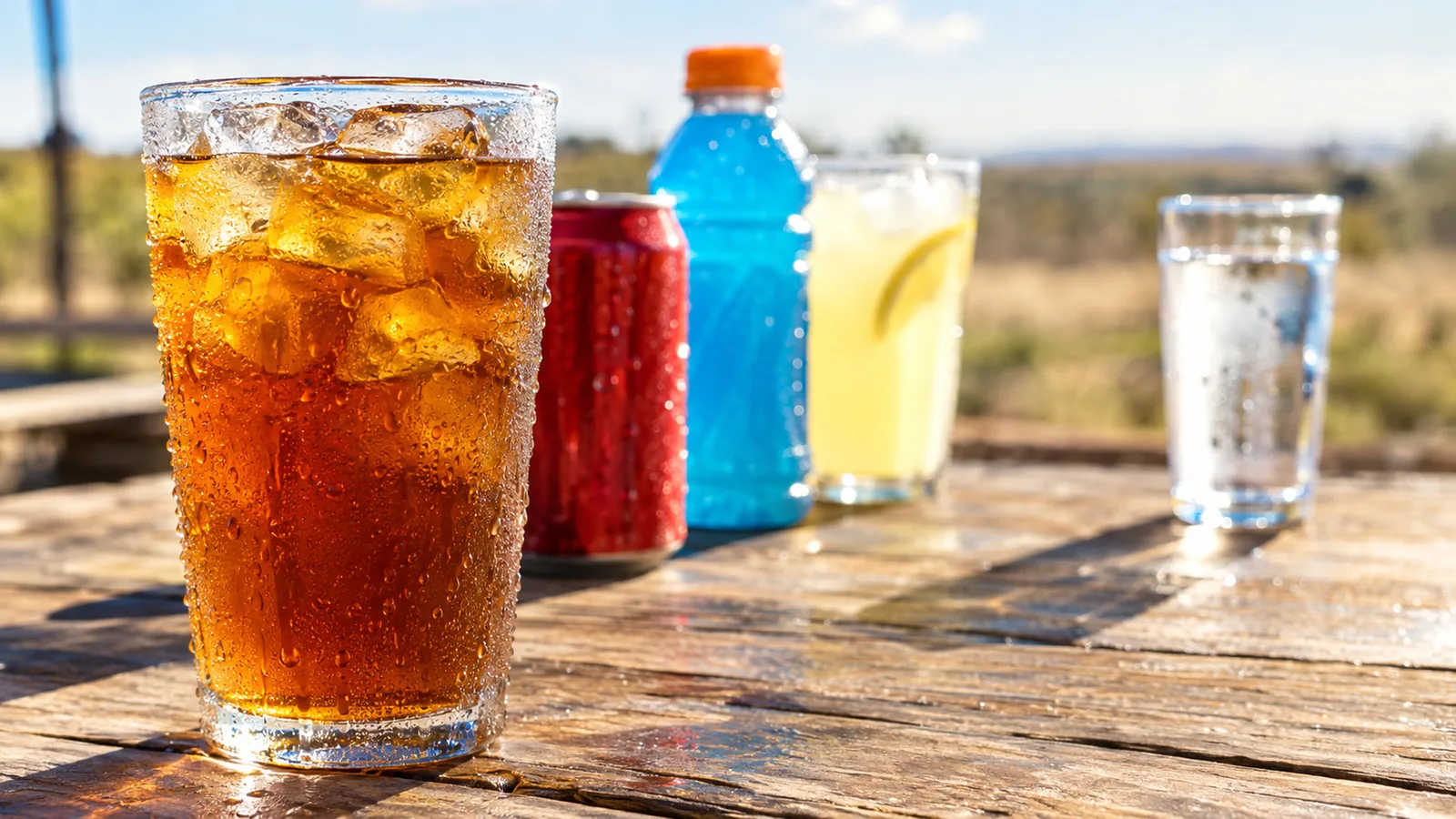
It's June in Texas. The thermometer is climbing past 95, the ice chest is full, and whatever is in your hand right now — sweet tea, soda, sports drink, lemonade — is probably doing something to your teeth that has nothing to do with sugar.
It's doing it with acid.
The number every patient should know: 5.5
Tooth enamel is the hardest substance in the human body, but it has a chemical weakness. When the pH at the tooth surface drops below roughly 5.5 — the so-called critical pH — the mineral that makes up enamel begins to dissolve (Dawes, 2003). Above that threshold, your saliva can repair early damage by redepositing calcium and phosphate. Below it, you're losing mineral.
So the question isn't "does my drink have sugar?" It's also "what is my drink's pH?"
What researchers found when they tested 379 drinks
In 2016, researchers at the University of Alabama at Birmingham published a study in The Journal of the American Dental Association that measured the pH of 379 beverages sold in the United States (Reddy et al., 2016). The result should be on a billboard:
93% of the beverages tested had a pH below 4.0 — not just below the 5.5 danger line, but well below it. Because pH is a logarithmic scale, a drink at pH 3.5 is roughly 100 times more acidic than the 5.5 threshold where enamel starts to dissolve.
Sodas, sports drinks, energy drinks, fruit juices, flavored waters, sweet teas — the overwhelming majority of what's in the convenience-store cooler is, from your enamel's point of view, an acid bath. And this includes many drinks marketed as healthy. "Sugar-free" does not mean "acid-free."
Erosion is not the same as cavities
This matters because acid erosion is a different disease than tooth decay. Cavities are caused by bacteria fermenting sugar into acid in specific spots. Erosion is straight chemistry — acid contacting enamel — and it affects every surface the drink touches. Eroded teeth get thinner, more sensitive, more yellow (as the underlying dentin shows through), and more fragile. And unlike a cavity, I can't "fill" generalized erosion. That enamel is gone.
It's the sipping, not the drinking
Here's the part most people have never heard, and it echoes what we'll cover in August about sugar: how often matters more than how much.
Each sip restarts the acid clock. A large sweet tea finished with lunch in fifteen minutes is one acid challenge, and your saliva spends the next while neutralizing it and repairing the surface. The same tea nursed from a tumbler across four hours of errands is dozens of separate acid challenges — your enamel never gets a recovery period. Same drink, radically different damage.
The Dental Fitness® rules for summer drinks
I'm a realist. I'm not going to tell Texans to give up sweet tea in June. I'm going to tell you how to drink defensively:
Have it with a meal, not instead of one. Chewing drives salivary flow, and saliva is your buffer. Finish it — don't nurse it. One exposure beats twenty. Use a straw positioned past the front teeth to reduce contact time. Chase it with plain water. Water is essentially the only thing in the cooler your enamel truly ignores — and in Cisco, where our tap water isn't fluoridated, plain water plus a fluoride toothpaste is your baseline defense. Don't brush the instant you finish an acidic drink. Rinse with water and let your saliva do its chemistry; keep your brushing on its regular morning-and-night schedule.
The sip test
This month's homework is simple. Look at the drink in your hand and ask two questions: Is it acidic? (If it's not plain water or milk, assume yes.) And how long have I been sipping it?
You don't have to be perfect. You have to be aware. That's Dental Fitness® — knowing the score before the game is lost.
Dr. Jarred Donald practices at Cisco Dental Associates in Cisco, Texas, and is the originator of the Dental Fitness® framework.
References
- Dawes C. What is the critical pH and why does a tooth dissolve in acid? J Can Dent Assoc. 2003;69(11):722–724.
- Reddy A, Norris DF, Momeni SS, Waldo B, Ruby JD. The pH of beverages in the United States. J Am Dent Assoc. 2016;147(4):255–263.
Educational content only, and not a substitute for in-office clinical evaluation.