
Dental Fitness Blog · September 1, 2026
The Cheapest Insurance in Sports: Why Your Athlete Needs a Mouthguard
Athletes are roughly 1.6 to 1.9 times more likely to suffer an orofacial injury without a mouthguard. A Cisco, TX dentist on protecting teeth this football season.
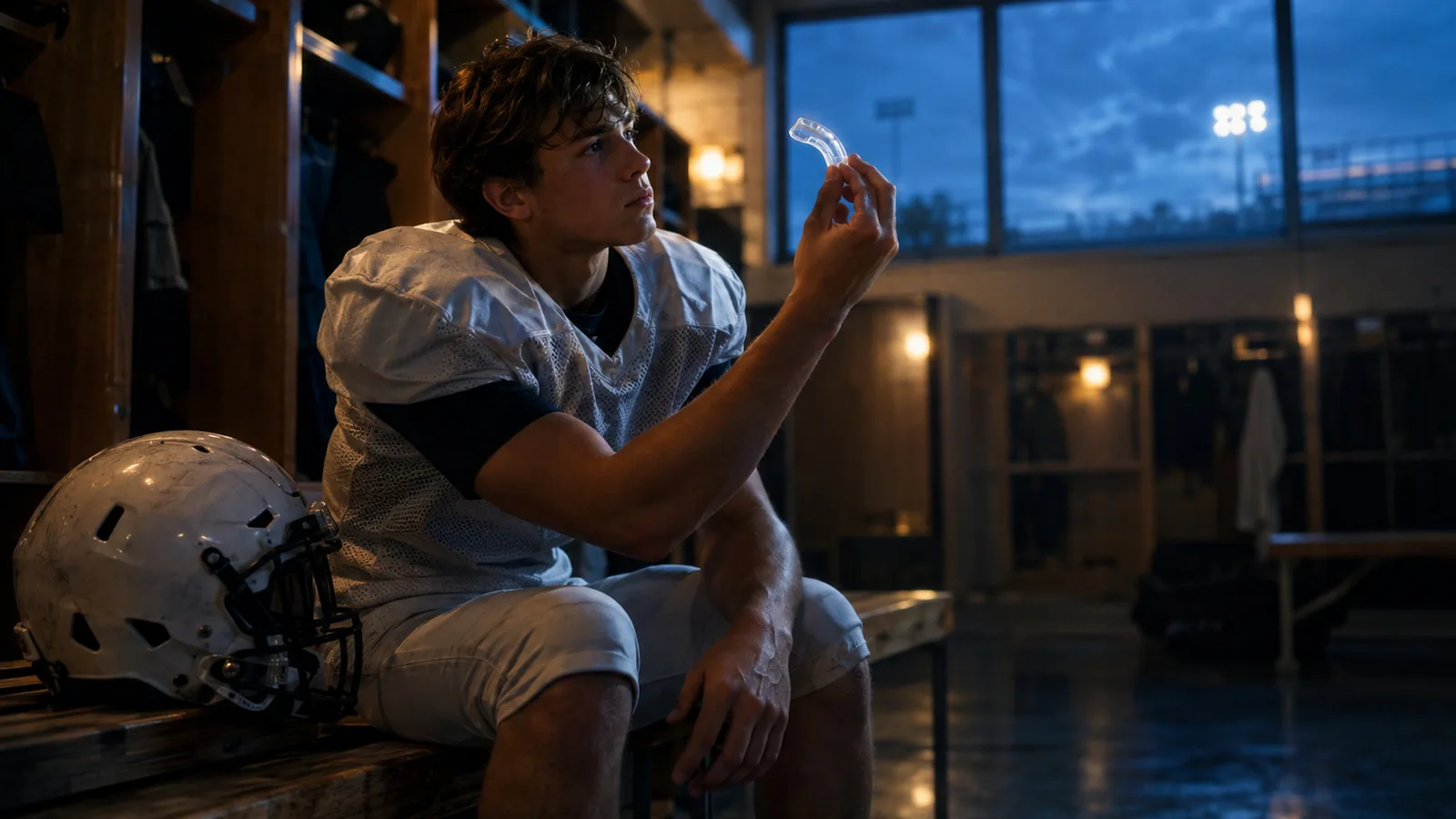
It's September. The lights are on Friday nights, volleyball is underway, and across Texas, parents are writing checks for cleats, helmets, pads, and physicals.
Here's the question I ask every sports parent who sits in my chair: you insured the knees and the head — did you insure the teeth?
Because a knocked-out front tooth is not a childhood mishap that heals. It is a permanent injury that your child will manage — and pay for — for the rest of their life. Splints, root canals, crowns, implants, and replacements of those implants, decade after decade. In over 26 years of practice, I have never met a parent who regretted buying a mouthguard. I have met several who deeply regretted not buying one.
What the evidence says
This isn't a hunch — it's a quantified risk. A systematic review and meta-analysis in the journal Sports Medicine pooled the available studies and concluded that the overall risk of orofacial injury is roughly 1.6 to 1.9 times higher when athletes do not wear a mouthguard (Knapik et al., 2007). The American Dental Association, drawing on that body of evidence, recommends a properly fitted mouthguard for organized and recreational sports with a risk of orofacial injury (ADA, Athletic Mouth Protectors).
And note what that risk category includes. Football gets the attention, but dental injuries show up from basketball, baseball, softball, soccer, wrestling, martial arts, mountain biking, and skateboarding. Several of those are sports where almost nobody wears a mouthguard — which is exactly why the injuries keep coming.
Not all mouthguards are equal
Walk into a sporting-goods store and you'll find three tiers, and the differences matter.
Stock mouthguards come pre-formed in a packet. They're inexpensive, but they fit no one in particular, and an athlete who has to clench to hold the guard in place — or who can't talk or breathe comfortably — tends to take it out. The best mouthguard is worthless in a gym bag.
Boil-and-bite guards soften in hot water and mold to the athlete's teeth. Done carefully, they're a meaningful upgrade and a reasonable choice for younger kids whose mouths are changing quickly with growth and orthodontics.
Custom-fabricated guards are made in a dental office from an impression or scan of the athlete's actual teeth. They fit precisely, stay seated without clenching, allow normal speech and breathing, and can be built to an appropriate, even thickness over the teeth that matter most. For a varsity athlete with a full set of permanent teeth, this is what I recommend — and what my own family wears.
One more case that's often missed: athletes in braces. Orthodontic brackets plus a collision equals lacerated lips and cheeks, and an interrupted orthodontic plan. Athletes in treatment need a guard designed to accommodate the appliances — talk to us or your orthodontist before the season, not after the injury.
The Dental Fitness® view
Dental Fitness® means treating your mouth like the athlete treats the rest of their body: measure the risk, then train and equip against it. The evidence gives us the risk number. The equipment answer costs less than a pair of cleats and takes one short visit.
So here's my September challenge for every family with a kid in a fall sport: before the first hard contact of the season, put a real mouthguard in the equipment bag — and build the habit that it goes in at every practice, not just on game night, because practices are where much of the contact actually happens.
Friday-night memories should be about the scoreboard. Call us — we'll have your athlete fitted and protected within the week.
Dr. Jarred Donald practices at Cisco Dental Associates in Cisco, Texas, and is the originator of the Dental Fitness® framework.
References
- Knapik JJ, Marshall SW, Lee RB, et al. Mouthguards in sport activities: history, physical properties and injury prevention effectiveness. Sports Med. 2007;37(2):117–144.
- American Dental Association. Athletic mouth protectors (mouthguards). ADA Oral Health Topics. Available at: ada.org/resources/ada-library/oral-health-topics/athletic-mouth-protectors-mouthguards.
Educational content only, and not a substitute for in-office clinical evaluation.